Why Gemstone Terminology Matters
When you're shopping for fine jewelry or gemstones, the words used to describe a gemstone — natural, untreated, heated, lab-grown — carry real meaning. They affect appearance, rarity, and value. Yet these terms are often used loosely, and buyers are left guessing. This guide breaks down each category so you know exactly what you're looking at before you buy.
The Four Key Categories
1. Natural Gemstones
A natural gemstone is one that formed in the earth through geological processes, without human intervention in its creation. Natural does not automatically mean untreated — it simply refers to origin. A ruby mined in Mozambique is natural whether it has been heated or not.
What to look for: The word "natural" on its own tells you about the origin and not the possibility of any treatments.
2. Untreated Gemstones
An untreated gemstone is a natural stone that has not undergone any process beyond cutting and polishing to enhance its color or clarity. No heat, no fillers, no coatings or irradiation. These stones are rarer and, for many types like sapphire, ruby, and emerald, command a price premium.
Common untreated gemstones you may encounter: certain sapphires, rubies, alexandrite, paraíba tourmaline, many quartz, garnets, peridot, zircon, chrysoberyl, and a range of collector minerals.
What to look for: Responsible sellers will state "no indications of heating" or "no evidence of treatment". Not every stone comes with a lab certificate, but a knowledgeable seller should be able to speak to the stone's treatment status based on their sourcing.
3. Treated Gemstones
Treatment refers to any process applied to a natural gemstone — beyond cutting and polishing — to improve its appearance. Treatment is extremely common across the gem trade and is not inherently deceptive, provided it is disclosed. The most important thing for buyers to know is: was it disclosed?
Common Treatment Types
- Heat treatment: The most widespread treatment. Stones are heated to high temperatures to improve color, clarity or change colors. Sapphires and rubies are routinely heated and when done well, heat treatment is stable and long-lasting.
- Fracture filling: Small surface-reaching cracks are filled with a glass-like substance or resin to improve apparent clarity. Common in rubies and emeralds. Requires more careful handling than untreated stones.
- Oiling and resin impregnation: Emeralds are almost universally oiled to a minor degree. Cedar oil or synthetic resins fill surface fractures and improve transparency. "Minor" to "significant" oiling is graded and disclosed on lab reports.
- Irradiation: Exposure to radiation to alter color. Used in blue topaz, some diamonds, and certain tourmalines. Generally stable under normal wear conditions.
- Beryllium diffusion: A lattice-level treatment used on some sapphires and rubies to intensify color. Requires lab-level testing to detect and should always be disclosed.
- Coating: A thin layer applied to the surface to enhance color or add optical effects. Less stable than other treatments; coated stones require gentle care.
What to look for: Ask whether the stone has been treated and, if so, what type of treatment. A seller who has sourced their gems responsibly will have this information.
4. Lab-Grown Gemstones
A lab-grown gemstone (also called synthetic or lab created) has the same chemical composition, crystal structure, and physical properties as its natural counterpart — it's just grown in a controlled environment rather than the earth. Lab-grown sapphires, rubies, emeralds, and diamonds are widely available and visually identical to natural stones without specialized equipment.
Lab-grown stones are not imitations or simulants. A lab-grown emerald is chemically an emerald. A cubic zirconia, by contrast, is a simulant — a different material that resembles a diamond.
What to look for: The terms "lab-grown," "lab-created," "synthetic," or "created" should appear in the product description. Reputable sellers disclose this clearly. If a price seems dramatically lower than market rate for a natural stone, it may be worth asking.
A Quick Reference: Side-by-Side Comparison
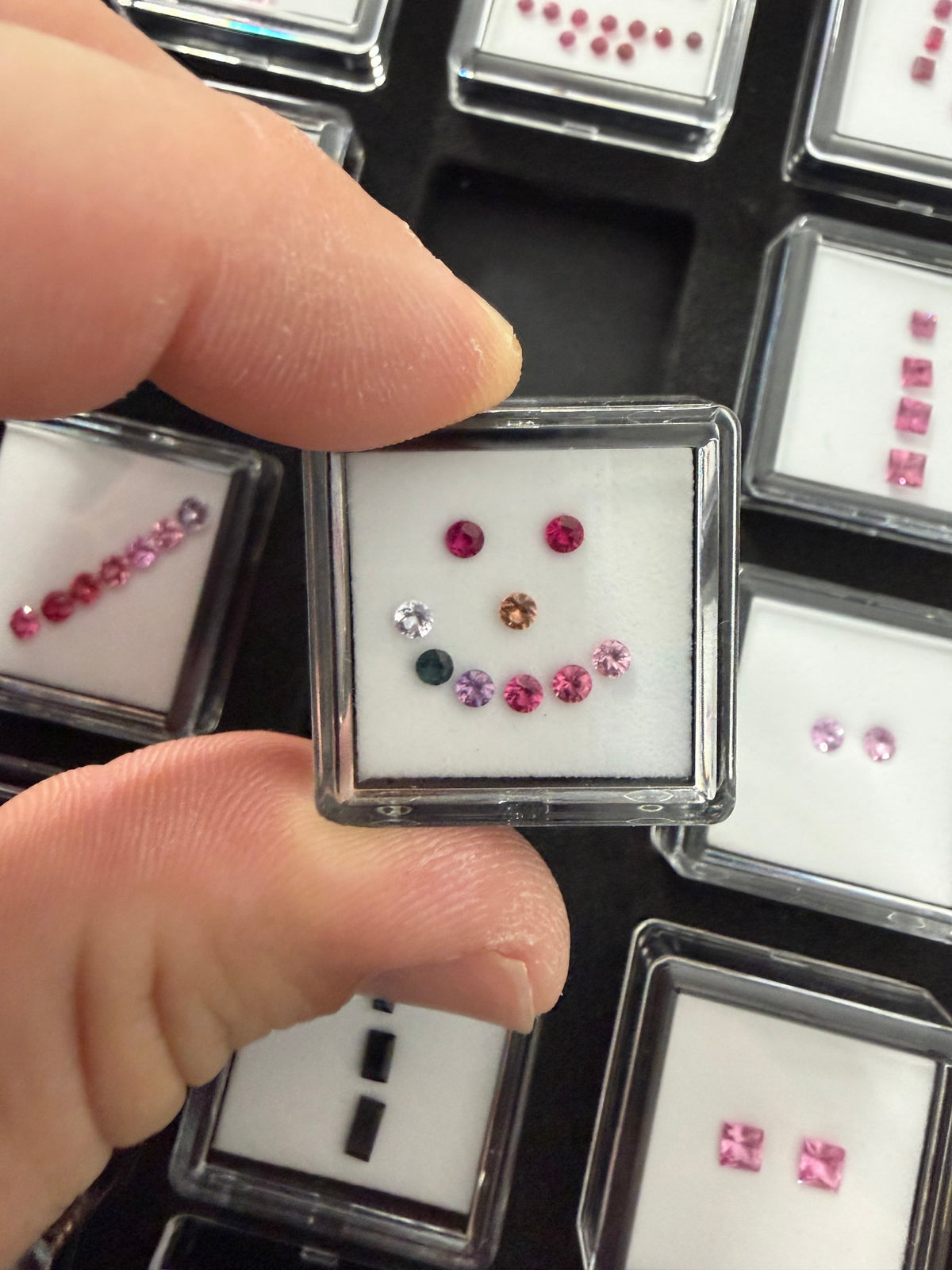
Mark Oliver Gems stones:
Earth Formed: All gemstones
Human Enhancement: Some, most untreated
| Category | Earth-formed? | Human enhancement? | Rarity premium? |
|---|---|---|---|
| Natural, untreated | Yes | No | Highest |
| Natural, treated | Yes | Yes | Moderate |
| Lab-grown | No | Created in lab | Lower |
How Gemological Laboratories Help
Independent gemological laboratories — such as GIA, GRS, Gübelin, and SSEF — analyze stones and issue reports documenting origin and treatment status. A lab report adds a layer of verification, particularly for high-value untreated stones.
That said, not every gemstone in the market comes with a laboratory certificate, especially at lower price points. A certificate is one tool, not the only measure of a seller's integrity. Sourcing transparency, clear disclosure, and a seller willing to answer your questions matter just as much.
Shop Our Gemstone Collections
At Mark Oliver Gems, we specialize in natural gemstones with a focus on transparency about sourcing and treatment status. Explore our collections below:
- Gemstone Pendants
- Loose Gemstones
- Rough Gemstone Jewelry
- Gemstone Rings
- Gemstone Stud Earrings
- Gemstone Dangle Earrings
Have a question about a specific stone? Reach out — we're happy to share what we know about any piece in our collection.